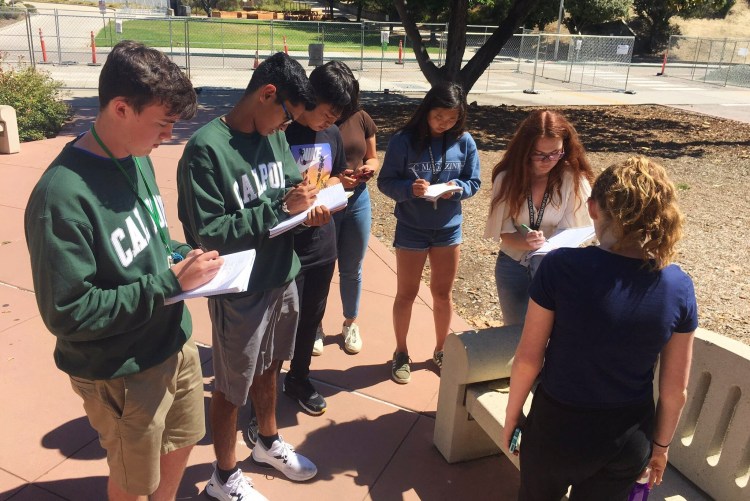
Students at the California Scholastic Press Association workshop do more in two weeks than most people do all summer.
In hands-on classes taught by media professionals and educators, you’ll learn to write clearly, think analytically and manage your time on deadline. You’ll be in class for most of each day, and will complete a story or other writing assignment on deadline in every class.
Each day is a little different, but the schedule typically looks like this:
- 9 a.m. to 10:30 a.m.: Class
- 10:30 a.m. to noon: Class
- Noon to 1:30 p.m. Lunch
- 1:30 p.m. to 3 p.m.: Class
- 3 p.m. to 4:30 p.m.: Class
- 4:30 p.m. to 6 p.m. Recreation and instructor office hours
- 6-7 p.m.: Dinner
- 7-9 p.m.: Class
- 9-10:30 p.m.: Nightly discussion with instructors and counselors
- 11:30 p.m.: Lights out
Our curriculum starts with the basics of reporting and news writing. Those classes lay the groundwork for specialty classes that delve into specific coverage areas such as politics, technology, data, business and entertainment reporting.
You’ll also learn to produce a television broadcast and learn the ins and outs of public relations and media law.
Some specialty classes change annually based on the availability of our volunteer instructors. But there are some classes you can expect every year, including:
Newswriting and lede writing: You’ll learn how to start your story with tight, bright and accurate ledes. We’ll also teach you how to structure news stories and attribute information.
Breaking news: News just broke. What do you do first? Who should you interview? And how do you assemble the information you’ve gathered on deadline? You’ll leave the classroom to interview sources, sort fact from fiction and write a story in this class that’s always a student favorite.
Court reporting: You’ll have a front-row seat to a real criminal trial, complete with judge, witnesses and attorneys. You’ll learn how the U.S. court systems work, how to navigate a courtroom and how to write — and re-write — stories as a narrative unfolds in front of you.
Feature writing: You’ll learn how to write a human-interest story and bring people to life through words.
Police reporting: You can’t work in journalism without learning the basics of the criminal justice system, including courts and police. You’ll learn how talk to law enforcement officials, avoid police jargon and accurately attribute information.
Photojournalism: You’ll learn the basics of photojournalism, including how to approach subjects, compose a shot and capture the moment. You will take and edit your own photographs and discuss the ethics of photojournalism.
Public records: Documents from public agencies are a key part of daily and investigative journalism. You’ll learn the ins and outs of public records laws and how to use documents in your stories.
Reviews: Opinions have no place in news stories, but in reviews, they’re welcome. You’ll watch a famous episode of television and learn how to clearly express your opinions on what you liked, what you didn’t and — most importantly — why.
Sports writing: Veteran sportswriters will teach you the basics of covering athletics, including writing about the outcome of a game and interviewing athletes and coaches.
Television production: You’ll produce a broadcast with your classmates in a real television studio with the help of a veteran TV news producer.
You’ll end each day in a casual discussion, talking with our instructors and counselors about everything from ethics in journalism to college choices. We sometimes bring in surprise guests, including workshop alumni and colleagues from our instructors’ newsrooms.
In the evenings, we also hand back your assignments with feedback and grades. Our instructors return your stories within a few days so you can incorporate their feedback into your stories and make rapid progress while still at the workshop. You’ll have the chance to talk to your instructors privately if you have questions or want more feedback.
You’ll work hard, but not all the time. We spend an afternoon at the beach and an evening at the farmer’s market in downtown San Luis Obispo. You’ll have a chance to step away from the keyboard most afternoons for a recreation period, too.
 CSPA Summer Journalism Workshop
You must be logged in to post a comment.